2026-10-25 · Rick Sullivan
How Las Vegas Summer Heat Impacts Dumpster Use for Home Projects
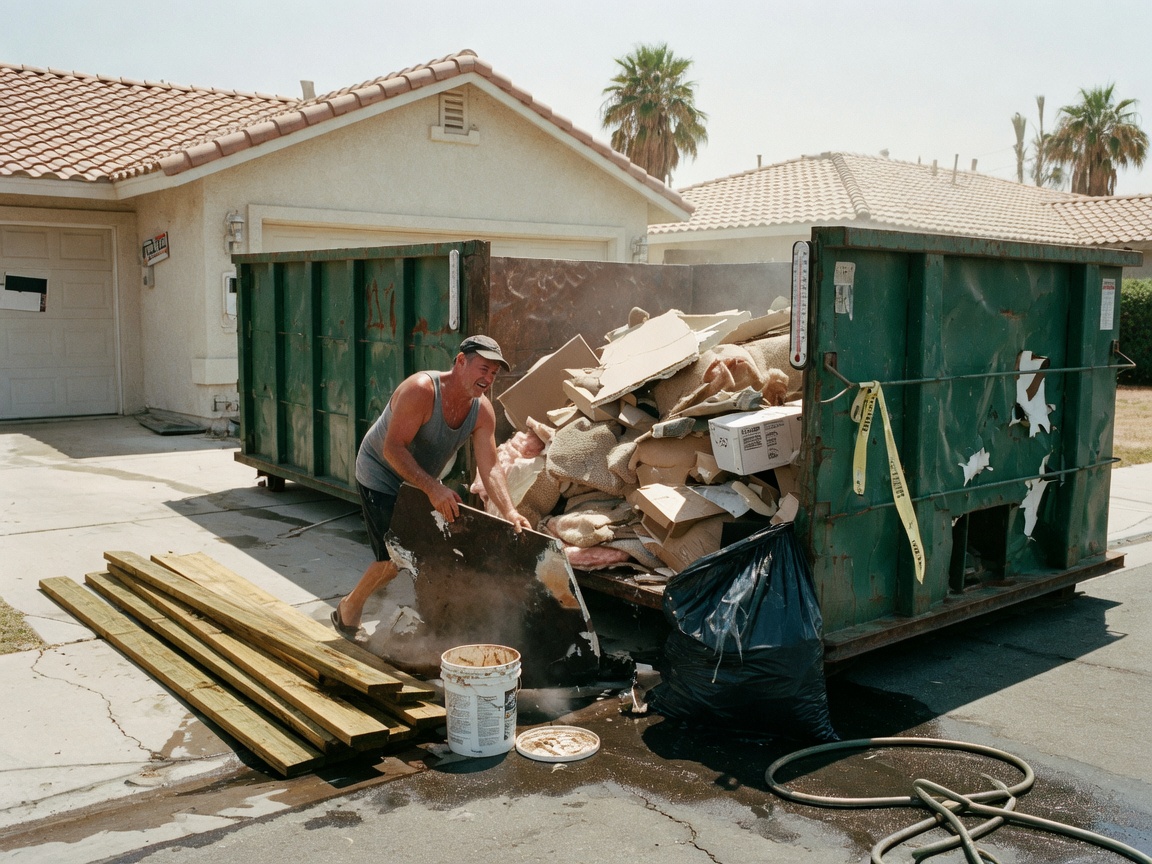
Las Vegas summer heat drives dumpster interior temperatures above 120°F on most days from June through September, forcing homeowners to adjust loading practices, cover materials, and schedule pickups more carefully than in milder seasons. This extreme desert climate accelerates odor buildup, softens certain construction debris, and raises fire risks when flammable items sit exposed. Projects in neighborhoods such as Summerlin, Spring Valley, and Enterprise see these effects daily because of the combination of intense sun and low humidity. Homeowners working on renovations near the Las Vegas Strip or in Downtown Las Vegas often discover that midday loads become harder to handle without extra precautions.
Heat Effects on Common Debris Types
High temperatures soften asphalt shingles and roofing tar, causing them to stick to dumpster floors and sides instead of sliding out cleanly at the landfill. Concrete and tile fragments retain heat longer, creating burn hazards for anyone sorting loads later. Wood framing and landscaping waste dry out rapidly, increasing the chance of spontaneous combustion when mixed with oily rags or solvents. In Clark County, crews report that loads containing drywall compound or paint residue generate stronger fumes that linger inside the container for days. Residents in Centennial Hills and Lone Mountain often schedule shorter rental periods during peak summer to avoid these issues.
Homeowners can reduce problems by layering heavier items at the bottom and keeping lighter, heat-sensitive materials on top. Placing a tarp over the open top during the day limits direct sun exposure and cuts interior temperatures by roughly 20 degrees. Checking loads each evening prevents overnight odor complaints from neighbors in denser areas like the Arts District or Chinatown.
Safety and Scheduling Adjustments
Workers and residents face higher heat-stress risks when loading dumpsters between 10am and 4pm. Many projects in Henderson and North Las Vegas shift heavy lifting to early morning or late evening windows. Metal dumpsters parked on driveways can reach surface temperatures that blister skin on contact, so gloves become essential. Dumpster Rental providers recommend placing units on the north side of homes when possible to gain a few degrees of shade from the structure itself.
Clark County rules for placing a dumpster on residential streets still apply in summer, yet inspectors pay extra attention to secure covers because wind can lift lightweight tarps during monsoon gusts. Clark County Rules for Placing a Dumpster on Residential Streets outlines permit steps that remain unchanged by season but become more critical when loads must stay covered at all times.
Project Planning for Las Vegas Neighborhoods
Older housing stock in Sunrise Manor and Downtown Las Vegas often requires more frequent hauls because smaller lots leave less room for on-site sorting. Newer builds in Summerlin South and Enterprise generate larger volumes of packaging and insulation that absorb and hold heat. Residential Dumpster Rental customers in these areas frequently request 20-yard containers rather than 30-yard units so loads can be removed before temperatures compound odor or fire concerns.
Landscaping projects near Red Rock Canyon or in Boulder City add extra considerations because desert plants and soil contain less moisture and ignite faster once inside a hot container. Homeowners should separate green waste from treated lumber and keep both piles away from the main structure. What Influences Dumpster Rental Pricing in Summerlin Versus Henderson shows how seasonal demand and extra cover requirements can shift costs between these two communities during the hottest months.
Planning around the heat allows projects to finish on time without extra cleanup or safety incidents. Local operators at 5375 Cameron St M, Las Vegas, NV 89118 keep units staged for quick swaps so residents avoid leaving full loads exposed during July and August peaks.